Irreversible LED Lighting Setup: A Smart Upgrade for Year-Round Aesthetic Charm
A home's outside does more than shield what is inside. It sets a tone before anyone gets to the front door. Good landscape design assists. Fresh paint aids. Tidy rooflines, noticeable home numbers, and a clear walkway all issue. Yet among the most forgotten upgrades is illumination, specifically lighting that looks intentional in every season.
That is where Permanent LED Illumination Setup has begun to transform the conversation. What began as a way to stay clear of climbing ladders every December has actually turned into a practical exterior renovation with benefits far past vacation décor. House owners want benefit, yet they also desire a cleaner facade, far better evening presence, lower upkeep, and lights that can move from cheery to refined without looking short-lived. Succeeded, permanent lighting can supply every one of that.
The crucial expression is "succeeded." I have actually seen houses where the system virtually goes away throughout the day and gives the residential or commercial property a polished, welcoming take a look at night. I have additionally seen setups that yell for focus in the most awful method, with noticeable tracks, uneven spacing, extreme shades, or app setups that make a wonderful colonial home look like a gallery. The difference comes down to preparation, item top quality, and restraint.
Why long-term lighting makes good sense beyond the holidays
Most people first take into consideration Permanent Vacation Lighting because they are tired of the yearly cycle. They haul boxes out of storage, untangle hairs, replace scorched light bulbs, climb onto roofs or expansion ladders, and after that repeat the entire process in reverse a couple of weeks later. That routine gets old, and it obtains riskier with age. Also for more youthful home owners, one awkward action on a wintry rain gutter line can transform an easy enhancing day into an emergency room visit.
But when a permanent system is installed, the worth expands right into the other eleven months of the year. You are not restricted to red and environment-friendly in December. You can utilize soft brownish-yellow lights along the eaves in fall, an amazing white overview for wintertime evenings, school shades for a graduation event, or underrated accent illumination for exterior suppers in June. Numerous house owners at some point stop thinking of the system as "vacation lights" and start seeing it as part of your house, similarly they view pathway lights or landscape uplighting.
That change issues because it alters exactly how the investment ought to be evaluated. If a system just worked for three weeks annually, the price would feel indulgent for some households. If it boosts appearance, function, and ease of use all year, the numbers look different.
A properly designed setup can also make a property feel occupied and cared for. That has a functional effect. Residences with thoughtful outside lights often show up a lot more safe and secure, especially when lighting schedules are linked to dusk or can be turned on remotely when the owners are away. It is not a replacement for real safety and security procedures, but it does reduce the "dark and empty" appearance that draws in the incorrect type of attention.
The ideal setups are nearly undetectable in daylight
The initial question I tell house owners to ask is not regarding illumination, shade alternatives, or application functions. It is this: what will it appear like at noon in full sun?
Permanent systems survive your house year-round. If the track, network, or circuitry is clumsy, you will notice it each time you pull into the driveway. On some homes, especially those with crisp trim details or historic character, an improperly matched system can lower the style. On the other hand, a low-profile track color-matched to the soffit or fascia tends to disappear.
This is where seasoned installers make their fee. They recognize where to place the run so the lights clean the outside as opposed to glare directly into the road. They know how to browse corners cleanly. They know that a house with several rooflines, dormers, and transforming pitches requires more thought than an easy ranch. They additionally recognize when not to set up on specific surface areas without additional preparation. Older timber trim, brittle material, or unpleasant overhangs can require a much more cautious installing strategy.
There is a lure to concentrate on the technology since apps and shade controls are easy to market. The unglamorous reality is that fit and surface generally establish whether home owners stay delighted with the purchase.
Light top quality matters greater than a lot of customers expect
One of one of the most typical blunders is presuming that more brightness amounts to far better curb allure. It rarely does. Outside lighting must flatter a home, not overwhelm it. On several homes, particularly standard homes with block, stone, or warm-toned siding, softer output develops a richer result.

That is why lots of people gravitate toward Classic Cozy Soft Lights for day-to-day use. Cozy light has a tendency to be more forgiving on all-natural materials and more inviting from the street. It complements deck lights and instructor fixtures much better than a raw blue-white tone. It additionally really feels more residential. If you have ever before driven through a neighborhood and noticed one home glowing in a manner that really felt much more like a cars and truck dealership than a home, opportunities are the color temperature level was too great or the illumination was pushed as well high.
There is still plenty of area for color. Holidays, birthdays, video game days, and seasonal occasions are precisely where programmable RGB or RGBW systems beam. The trick is to deal with strong shade as a choice, not the default. The property owners who obtain one of the most lasting fulfillment are often the ones that utilize subtle, classy scenes the majority of the time and conserve animated impacts for a few targeted occasions.
I have actually seen this play out many times. A household installs a costs system and invests the very first month trying every setting in the app. Chasing after lights, rainbow sweeps, pulsing patterns, alternating sections, all of it. After that the novelty wears off. What sticks is a quiet warm white or a low brownish-yellow radiance that simply makes your home look far better during the night. That steady setup ends up carrying most of the year.
Curb charm is not simply design, it is consistency
A home looks a lot more costly when its exterior components interact. Lights becomes part of that aesthetic rhythm. If the patio fixture is cozy, the garage sconces are cozy, and the irreversible roofline lights are a similar tone and strength, the whole residential property reads as intentional. If one element is amazing white, an additional is orange, and a 3rd is strongly bright, the effect comes to be patchy.

This is one factor I usually motivate property owners to think about the whole front altitude before setup begins. Long-term LED Lighting Installation should not be chosen alone. It needs to be thought about along with existing components, landscaping, and even sightlines from the street. A system can be practically superb and still really feel off if it disregards the rest of the facade.
Architecture also influences the end result. A modern-day home with tidy lines can manage a sharper discussion and stronger contrasts. An artisan, farmhouse, or typical block home usually takes advantage of warmer, much more controlled lights scenes. There is no global formula, yet there is a clear principle: the illumination ought to respect the house.
The labor savings are real, yet so is the safety benefit
Anyone that has set up seasonal lights for several years recognizes the concealed labor included. It is not just the time on the ladder. It is the hunt for missing clips, the trip to replace a dead section, the extension cables that in some way vanished, the timer that quit working, and the unavoidable jumble look when one section does not match the rest.
Permanent Vacation Lights eliminate most of that yearly rubbing. As opposed to committing a weekend to arrangement and one more to takedown, you open an application or make use of a wall surface control. That simpleness is easy to disregard until you have actually dealt with it. As soon as home owners stop investing cool mid-days on a ladder, extremely few want to go back.
The safety and security case is equally solid. Roof covering edges, especially on two-story homes or high pitches, are no place for a hurried seasonal task. A lot of individuals do not assume of themselves as taking a major threat due to the fact that they have "constantly done it by doing this." After that one wet shingle or one unsteady ladder angle modifications every little thing. Specialist permanent installation shifts the dangerous component to a skilled staff with correct equipment, and it gets rid of the need to duplicate that exposure each season.
Cost, value, and the concern homeowners really ask
Most buyers do not ask whether long-term lights works. They ask whether it is worth the price.
That response depends upon the house, the chosen system, and how the home owner prepares to use it. Expenses vary widely based on straight footage, roof complexity, control functions, access difficulty, and regional labor prices. A simple single-story setup might be much less expensive than a multi-gable two-story home with removed structures and custom scene programming. There is no straightforward one-size-fits-all number.
Still, value can be understood in functional terms. If you currently spend for annual vacation light installment, storage space, maintenance, and removal, a permanent system may contrast extra positively than anticipated over several years. If you install seasonal lights yourself, the return is a lot more regarding time conserved, lowered hassle, and a good-looking result. For some home owners, that is plenty. For others, the benefit is tied to entertaining, neighborhood standards, or simply satisfaction in just how the building provides after dark.
Resale value is tougher to evaluate. Irreversible lighting is not likely to change a modest house into a top-tier listing by itself. Yet appealing, low-maintenance exterior upgrades do shape purchaser perception. People respond to homes that really feel cared for, current, and very easy to own. A stylish system can support that impression.
What divides a top quality system from an unsatisfactory one
There is much more variation in this market than several buyers realize. Some systems are robust, weather-resistant, and thoughtfully engineered. Others look fine on the first day but reveal weaknesses after a period or two, especially in extreme climates.
When I examine systems and installers, I pay attention to a couple https://scwardciox.gumroad.com/ of functional points:
- Daytime appearance and track finish
- Water resistance at links and control elements
- App integrity and simplicity of scheduling
- Diode spacing, brightness control, and color quality
- Warranty coverage, and that really solutions problems
That last factor should have emphasis. A service warranty only aids if the company behind it addresses the phone and can send out somebody experienced when a section stops working. Outside systems endure heat, cool, wind, rain, and power changes. Issues can occur despite having excellent products. Solution matters.
Brightness control is another element customers often neglect. A system needs to not simply switch on and change colors. It needs to lower smoothly. The capacity to dial lighting to a softer level is usually what makes the difference in between "festive" and "classy." On a peaceful weeknight, your house does not require to announce itself to the entire block.
Installation information that home owners need to not ignore
A great installer will certainly stroll the property and ask questions that seem picky. That is a good sign. They need to be inspecting power access, discussing where the controller will live, taking a look at soffit deepness, and determining problem areas like irregular trim lines or areas revealed to hefty runoff.
On some homes, the cleanest aesthetic outcome comes from putting the lights slightly back under the soffit so the radiance mirrors off the exterior. On others, the building profile requires a different positioning. The right selection depends upon how your house is built and what effect you want from the road. There is craft entailed right here. It is not just "attach lights to edge."
Homeowners need to likewise ask just how edges are taken care of, whether noticeable wiring will be lessened, and what takes place where rooflines damage or shift. This is particularly essential on homes with additions. A front altitude might consist of trim products from different periods, and those surface areas do not all approve fasteners in the same way.
If you reside in a location with ice, extreme summer season sun, salt air, or regular storms, discuss that early. Environment influences material performance. What works beautifully in a mild area may need additional defense or a different installing approach elsewhere.
Everyday use is where contentment is won or lost
A permanent system can be technically remarkable and still come to be irritating if daily procedure is awkward. Home owners should analyze just how they really intend to make use of the lights.
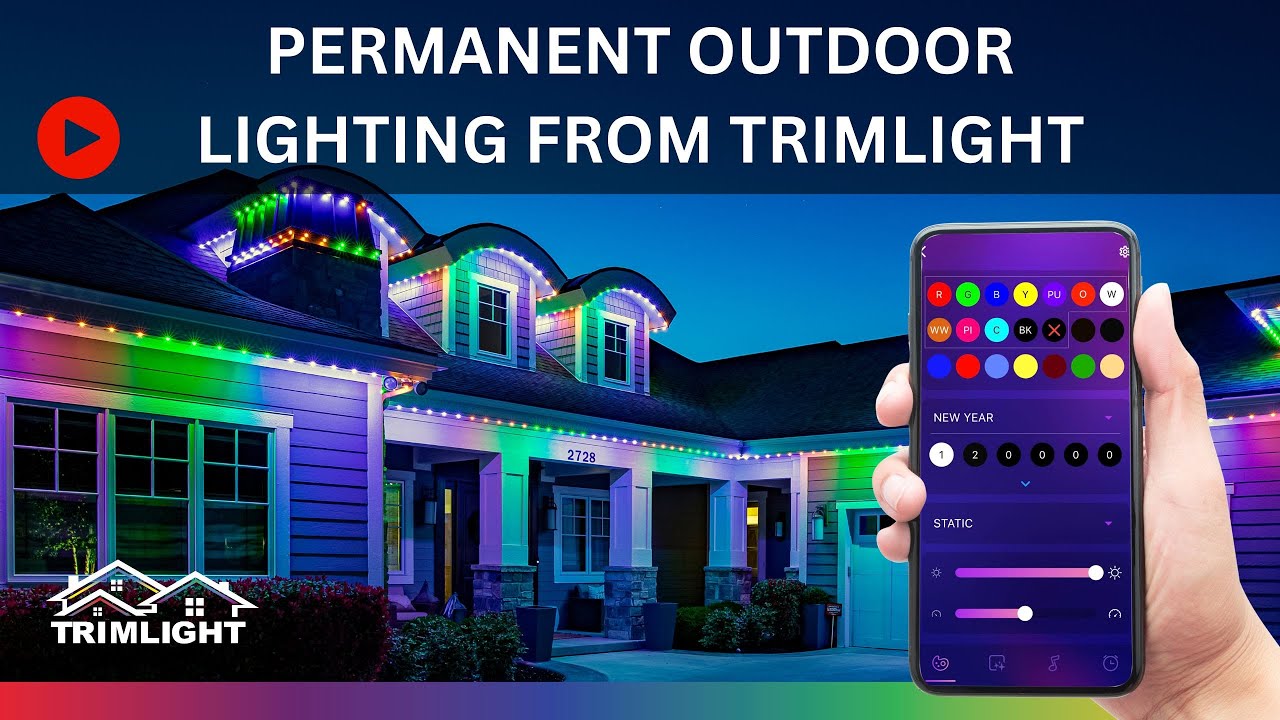
If the app is sluggish, buggy, or complicated, excitement discolors fast. If the system can not conveniently shop favorite scenes, customers end up leaving it on one setting due to the fact that changing it seems like a duty. If the controls are also broad and do not enable valuable area management, a big residence may never look balanced.
The finest systems make regular use simple. Sundown organizing, timed shutoff, a few refined presets, and easy brightness modification go a lengthy method. That may appear basic, however benefit is what makes a permanent setup feel premium after the novelty puts on off.
For lots of houses, the pleasant spot is simple: a cozy nighttime accent scene, a brighter welcome-home setup for visitors, and a handful of seasonal presets. That is typically enough. Not every residence requires a collection of 200 animations.
Common mistakes that make a home look worse, not better
The market teems with instances that confirm permanent illumination is not automatically eye-catching. One of the most regular errors are very easy to identify once you understand what to look for.
The initial is over-lighting. Excessive strength rinses building detail and draws attention to the fixture line as opposed to your home. The 2nd is bad color self-control. Saturated shades utilized too often can make a nice home feel industrial or newfangled. The third is bad alignment. Irregular spacing or careless corner changes produce a disruptive rhythm that the eye captures immediately.
Another issue is inequality. If your home's outside lights plan is developed around soft lantern-style fixtures, a puncturing cool-white roofline treatment will look detached. Likewise, if your home has a fine-tuned, standard facade, computer animated patterns every evening can damage that character.
This is where judgment matters greater than function matter. An innovative setup is not the one with the most impacts. It is the one that enhances the home without asking for constant attention.
Who benefits most from this upgrade
Not every house owner requires Permanent LED Illumination Installment, yet there are clear situations where it makes strong feeling. Active households that desire the cheery look without the seasonal labor are evident candidates. So are homeowners intending to age in place, where decreasing ladder work is a genuine safety renovation. People that entertain typically, live on famous edge whole lots, or merely care a good deal about nighttime curb appeal also tend to see the value quickly.
It is especially appealing on homes where roofline lighting can define solid architecture. A clean summary on the best home can create a sleek night visibility that landscaping alone can not attain. At the same time, the upgrade can be remarkably effective on easier homes, where a restrained warm radiance adds measurement and makes the residential property feel even more finished.
It might be much less compelling for home owners that highly do not like visible modern technology, rarely use exterior lighting, or plan to relocate very soon and are not likely to delight in the system long enough to justify the expenditure. There is no embarassment in choosing that typical seasonal design fits your routines much better. The point is to match the product to the household, not the trend.
A good last test prior to you commit
Before signing an agreement, ask the installer to show you a neighboring completed project face to face, preferably throughout the day and once more after dark. Pictures conceal a lot. They press scale, soften flaws, and make illumination more challenging to evaluate. Standing in front of an actual house informs you much more. Can you see the track from the driveway? Does the light appearance smooth? Are the corners cool? Does the color really feel sophisticated or harsh?
That straightforward go to commonly clarifies the choice. I have seen house owners go from passionate to hesitant once they see noticeable hardware on a residence similar to their own. I have likewise seen skeptics become persuaded when they understand just how very discreet a well-executed system can be.
If possible, talk with the proprietor for 2 mins. Ask what they make use of most often, whether the application acts reliably, and just how service has actually been. Those answers are usually better than a sales brochure.
The clever upgrade is the one you will certainly still value in five years
Exterior upgrades make their maintain when they remain to really feel useful long after the enjoyment of installment day discolors. Long-term Vacation Lights can absolutely satisfy that standard, but just when the layout is thoughtful and the implementation is clean.
The most effective projects are not the flashiest. They are the ones that make a residence feel even more completed every night, decrease yearly problem, and offer property owners quiet adaptability throughout the year. They sustain joyful moments without residing in permanent party setting. They use shade when shade is wanted and settle right into Traditional Cozy Soft Lights when the objective is basic comfort and curb appeal.
That balance is what makes Permanent LED Lighting Installation such a smart upgrade. It is not just concerning preventing twisted strands in a garage container. It has to do with providing the home a more sleek nighttime identification, one that operates in December, in July, and on every normal night in between.